
Why Do I Get Pelvic Pain When Sitting?
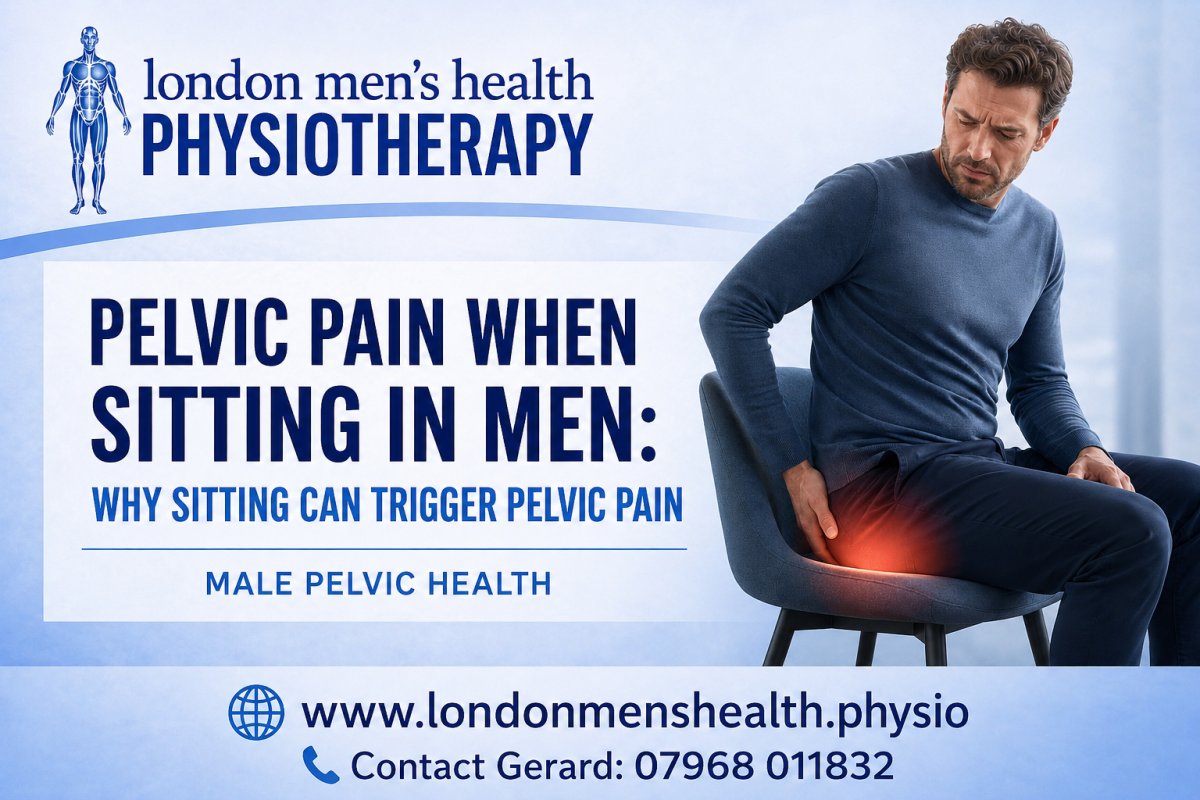
A Men’s Health Physio Guide to Sitting Pain, Pudendal Nerve Irritation and Pelvic Floor Tension
For many men, pelvic pain is not constant. It is not always there during walking, standing or exercise. Instead, it appears when they sit.
This can be one of the most frustrating patterns of male pelvic pain because sitting is almost impossible to avoid. You may need to sit for work, commuting, driving, eating, travelling, meetings, family life and social events. When sitting becomes painful, it can quickly start to affect your confidence, your mood and your quality of life.
At London Men’s Health Physiotherapy, we regularly see men who describe symptoms such as pain in the perineum, penis, testicles, rectum, coccyx or deep pelvis that becomes worse after sitting. Some men also describe burning, pressure, tingling, numbness, urinary urgency, erectile changes or pain after ejaculation.
Understandably, many men worry that something serious has been missed. They may have already seen their GP, urologist, colorectal specialist or pain consultant. Often, scans and tests are normal, but the pain continues.
The good news is that sitting-related pelvic pain is a pattern we see frequently, and in many cases, it can improve with the right assessment and treatment plan.
Why does sitting trigger pelvic pain in men?
Sitting changes the load through the pelvis. When you sit, pressure increases around the perineum, coccyx, ischial tuberosities and deep pelvic floor muscles. If the tissues in this area are already sensitive, tense or irritated, sitting can become a major trigger.
There is rarely one single cause. More commonly, sitting pain develops from a combination of factors.
These may include:
• Overactivity or guarding in the pelvic floor muscles
• Pudendal nerve irritation or sensitivity
• Previous cycling, gym training or prolonged sitting
• Stress-related muscle tension
• Hip, lower back or coccyx stiffness
• Bowel strain or constipation
• A previous infection or prostatitis-type episode
• A period of increased anxiety around symptoms
• Previous surgery, trauma or irritation to the pelvic region
This does not mean the pain is “in your head”. It means the pelvic system has become sensitive. Muscles, nerves, joints, fascia, bladder, bowel and the nervous system can all become involved.
What is the pudendal nerve?
The pudendal nerve is one of the main nerves supplying the pelvic region. It travels through the pelvis and provides sensation and function to areas including the penis, scrotum, perineum and anus.
When the pudendal nerve becomes irritated, men may describe symptoms such as burning, tingling, numbness, electric pain, sharp pain, foreign body sensations or increased sensitivity around the perineum, penis, testicles or rectal area.
A classic feature of pudendal nerve irritation is that symptoms are often worse with sitting and better when standing or lying down. Some men feel better sitting on a toilet seat because it reduces direct pressure on the perineum.
However, it is important to say this clearly: not every man with sitting pain has pudendal neuralgia. Many men have pelvic floor muscle overactivity, local tissue sensitivity or referred pain from the back, hips or pelvic floor. This is why a proper assessment is so important.
Can the pelvic floor muscles cause sitting pain?
Yes. This is one of the most common things we see.
The male pelvic floor is a group of muscles that sit at the base of the pelvis. These muscles help with bladder control, bowel control, erections, ejaculation and pelvic support. Like any other muscle group, they can become tight, protective, painful or overactive.
When the pelvic floor is overactive, sitting can compress already sensitive tissues. The muscles may feel as though they cannot relax. Some men describe it as a golf ball sensation, a deep ache, a pressure feeling, rectal discomfort or pain between the anus and testicles.
This can be particularly confusing because many men assume pelvic floor physiotherapy only means strengthening exercises. In sitting-related pelvic pain, the priority is often not strengthening. The priority is usually reducing overactivity, calming sensitivity and helping the pelvic floor learn to relax again.
Common symptoms of sitting-related male pelvic pain
Men may experience one or several symptoms at the same time.
These can include:
• Pain or pressure in the perineum
• Testicular or penile pain
• Rectal, anal or coccyx discomfort
• Pain that worsens with sitting
• Relief when standing, walking or lying down
• Burning, tingling or numbness
• Pain after ejaculation
• Urinary urgency or frequency
• Difficulty relaxing the pelvic floor
• Erectile changes or reduced confidence sexually
• Flare-ups after cycling, gym training or long car journeys
These symptoms can feel alarming, but they are common presentations in specialist men’s health physiotherapy.
Why does it sometimes feel worse at work or when travelling?
Many men notice that symptoms are worse during long workdays, commuting, train journeys, flights or long car trips.
This is not surprising. These situations often combine several triggers at once: prolonged sitting, reduced movement, pressure on the perineum, stress, dehydration, caffeine, poor posture and limited opportunities to change position.
In London, we commonly see men whose symptoms are aggravated by desk-based work, long Tube journeys, cycling to work, intense gym training or high-pressure professional roles. The body can start to associate sitting with threat, and the nervous system becomes increasingly protective.
A key part of treatment is breaking this cycle gradually and safely.
Should I stop sitting completely?
Usually, no.
Avoiding sitting completely can make life very difficult and may increase fear around symptoms. However, it is often helpful to temporarily modify sitting while the area settles.
This might include:
• Taking regular standing breaks
• Using a sit-stand desk if available
• Avoiding very hard chairs
• Reducing long, uninterrupted sitting blocks
• Using a pressure-relieving cushion
• Standing for phone calls or meetings where possible
• Planning movement breaks during travel
• Gradually rebuilding sitting tolerance rather than forcing through pain
The aim is not to become dependent on a cushion or avoid sitting forever. The aim is to calm the system down and then gradually restore confidence.
What type of cushion can help?
Some men benefit from a cushion that reduces direct pressure on the perineum. A standard doughnut cushion is not always the best option because it can sometimes increase pressure in other areas.
A better option is often a cushion that supports the sitting bones while unloading the perineal area. The right cushion depends on the individual, but the principle is simple: reduce direct pressure while avoiding excessive guarding or bracing.
A cushion is not the full treatment, but it can be a useful tool while the underlying drivers are being addressed.
How can specialist men’s health physiotherapy help?
A specialist assessment looks beyond the painful area alone. At London Men’s Health Physiotherapy, we assess the wider picture, including the pelvic floor, hips, lower back, abdominal wall, breathing pattern, sitting tolerance, bladder and bowel habits, exercise history and symptom behaviour.
Treatment may include:
• Education about what is driving the pain
• Pelvic floor relaxation and down-training
• Breathing exercises to reduce guarding
• Manual therapy to the pelvic floor, hips, back or abdomen
• Advice on sitting, cushions and workstation changes
• Graded return to exercise
• Bladder and bowel strategies if relevant
• Nerve calming strategies
• A home programme to help reduce flare-ups
• Support with returning to cycling, gym work or running
For some men, treatment includes external pelvic floor techniques. For others, internal pelvic floor assessment or treatment may be appropriate, but this is always discussed carefully and only carried out with full consent.
What should I avoid doing?
When men are desperate to improve, they often try many things at once. Unfortunately, this can sometimes keep the area irritated.
Common aggravating factors include:
• Repeatedly testing symptoms
• Aggressive stretching
• Heavy squats, deadlifts or intense core training during a flare
• Long cycling sessions too early
• Sitting through severe pain without breaks
• Excessive pelvic floor strengthening exercises
• Constant online searching for worst-case diagnoses
• Pushing too hard too soon when symptoms begin to settle
This does not mean you will never cycle, lift weights or sit normally again. It simply means the system may need a more graded approach.
Is recovery possible?
Yes, many men improve.
Recovery is not always instant, and progress is rarely perfectly linear. Sitting pain often improves gradually as the pelvic floor relaxes, the nervous system becomes less sensitive, pressure is better managed and confidence returns.
Good signs of progress may include:
• Sitting for longer before symptoms appear
• Less intense flare-ups
• Faster recovery after sitting
• Reduced perineal pressure or burning
• Improved urinary symptoms
• Better confidence with work, travel or exercise
• Less fear around symptoms
For many men, understanding the problem is the first major step. When you know why sitting is triggering pain, it becomes much easier to treat it properly.
When should you seek help?
You should seek medical advice if you have new or worsening neurological symptoms, unexplained weight loss, fever, blood in the urine or stool, significant night pain, new bladder or bowel control problems, or severe testicular pain.
However, if your tests are clear and you continue to experience pelvic pain that is worse with sitting, specialist men’s health physiotherapy may be very helpful.
How we can help at London Men’s Health Physiotherapy
At London Men’s Health Physiotherapy, we regularly assess and treat men with sitting-related pelvic pain, pudendal nerve irritation, chronic pelvic pain syndrome, penile pain, testicular pain and post-ejaculatory pain.
Our approach is calm, thorough and practical. We take the time to understand your symptoms, explain what may be happening and build a treatment plan that helps you get back to normal life.
If sitting has become painful, work has become difficult, or travel and exercise now feel restricted, you do not have to simply put up with it.
Specialist assessment can help you understand the cause of your symptoms and start moving forward again.
To book an appointment with London Men’s Health Physiotherapy, please contact the clinic through our website.
PLEASE USE OUR ONLINE APPOINTMENT SCHEDULER
We are booking appointments through October, 2026.
If you would like to schedule an appointment beyond October, 2026 or have any other appointment needs or questions please contact London Men's Health Physio using the form below or by phone, 07902 389456.
